

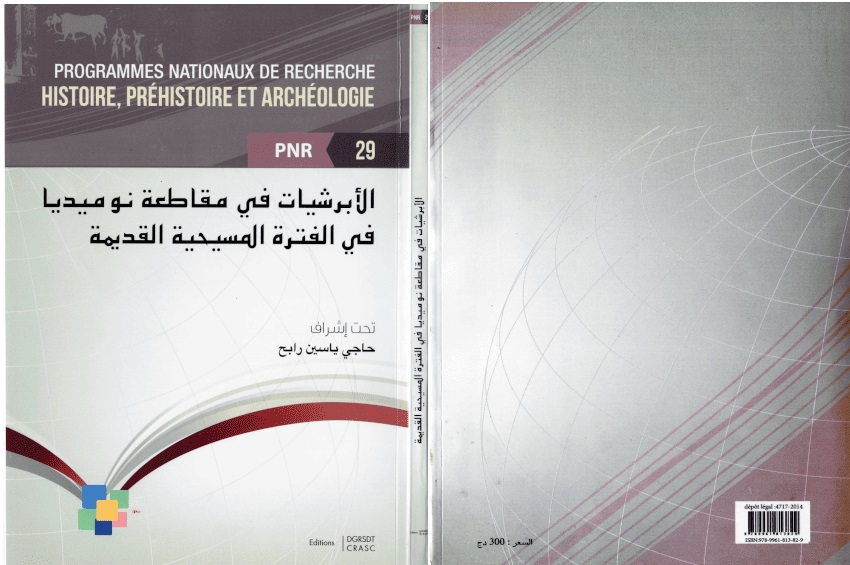
Numidia’s Provincial Eparchies in Early Christian Times
contributors
Coordinateur :
Hdji Yacine RABEH
abstract
In Late Antiquity, dioceses in the province of Numidia were established within both urban and rural settlements. According to canonical law, each city was required to have its own bishop, and thus every city corresponded to a diocese. In addition to urban centers, rural Roman settlements such as vici and castella, as well as semi-sedentary tribal centers (peuplades), and large agricultural estates (villae, fundi, saltus), also became loci of ecclesiastical organization. From the mid-second century CE, each major city church was structured around a bishop, assisted by presbyters, deacons, and deaconesses. This organization is attested in early ecclesiastical texts, including the writings of Tertullian in the second century and the documentary evidence of Saint Cyprian in the mid-third century. **